
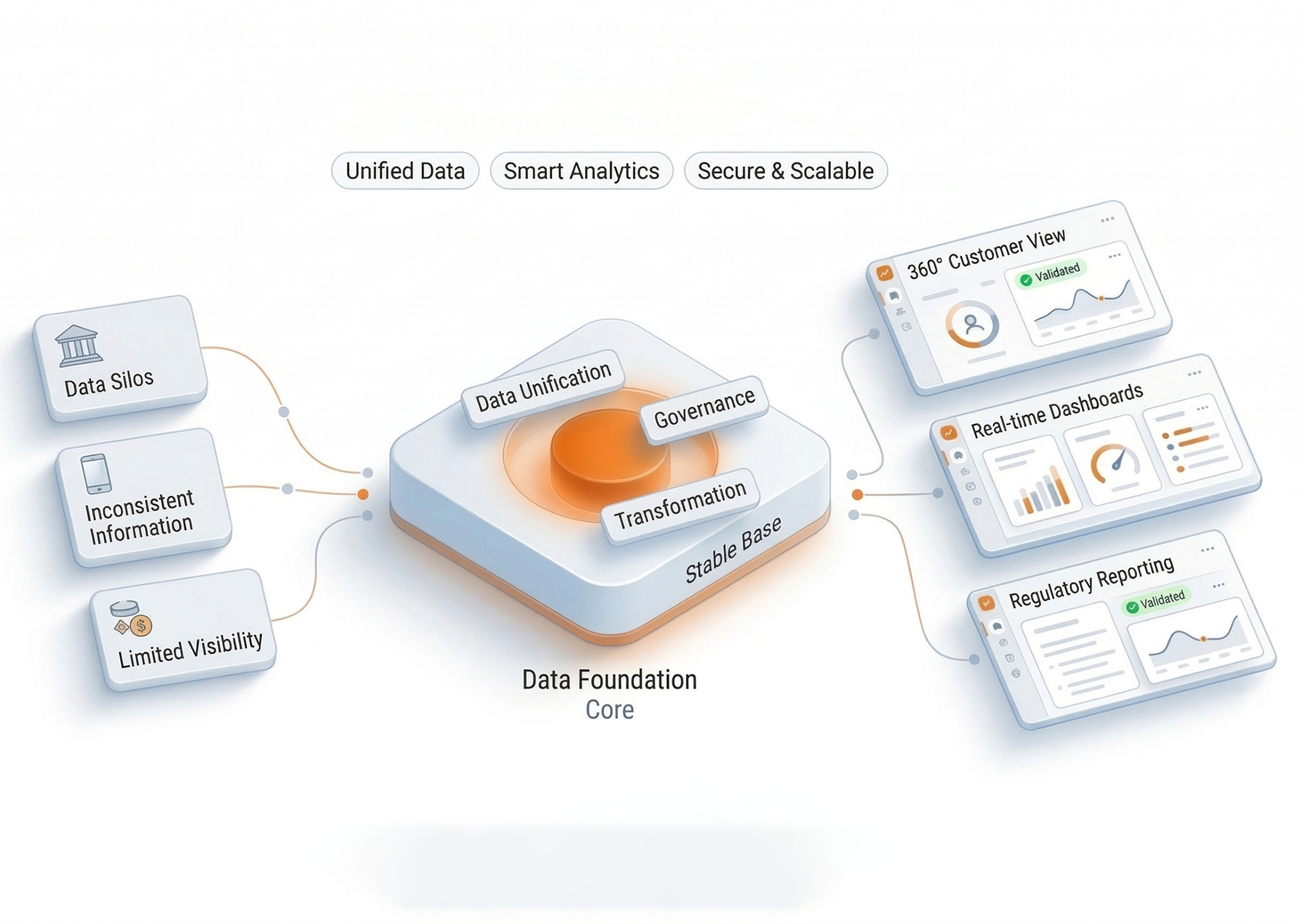
In today’s digital banking landscape, data is one of the most valuable assets for financial institutions. However, when data is fragmented across systems, inconsistent, or poorly governed, it creates operational inefficiencies and regulatory risks rather than delivering value. With multiple sources such as core banking systems, digital channels, risk platforms, and compliance frameworks, many banks struggle to establish a single, reliable version of the truth.
SIAS-EDWH (Smart Information & Analytics Solution – Data Warehouse) by Rumango is designed to address this challenge. It is an enterprise-grade data unification and analytics platform built specifically for banks and financial institutions. More than just a data repository, SIAS-EDWH transforms dispersed data into structured, reliable, and actionable intelligence—enabling better decision-making and ensuring regulatory compliance.
Whether it is meeting stringent central bank reporting requirements, enabling a 360° customer view, or empowering leadership with near real-time dashboards, SIAS-EDWH provides a secure, scalable, and intelligent data foundation.
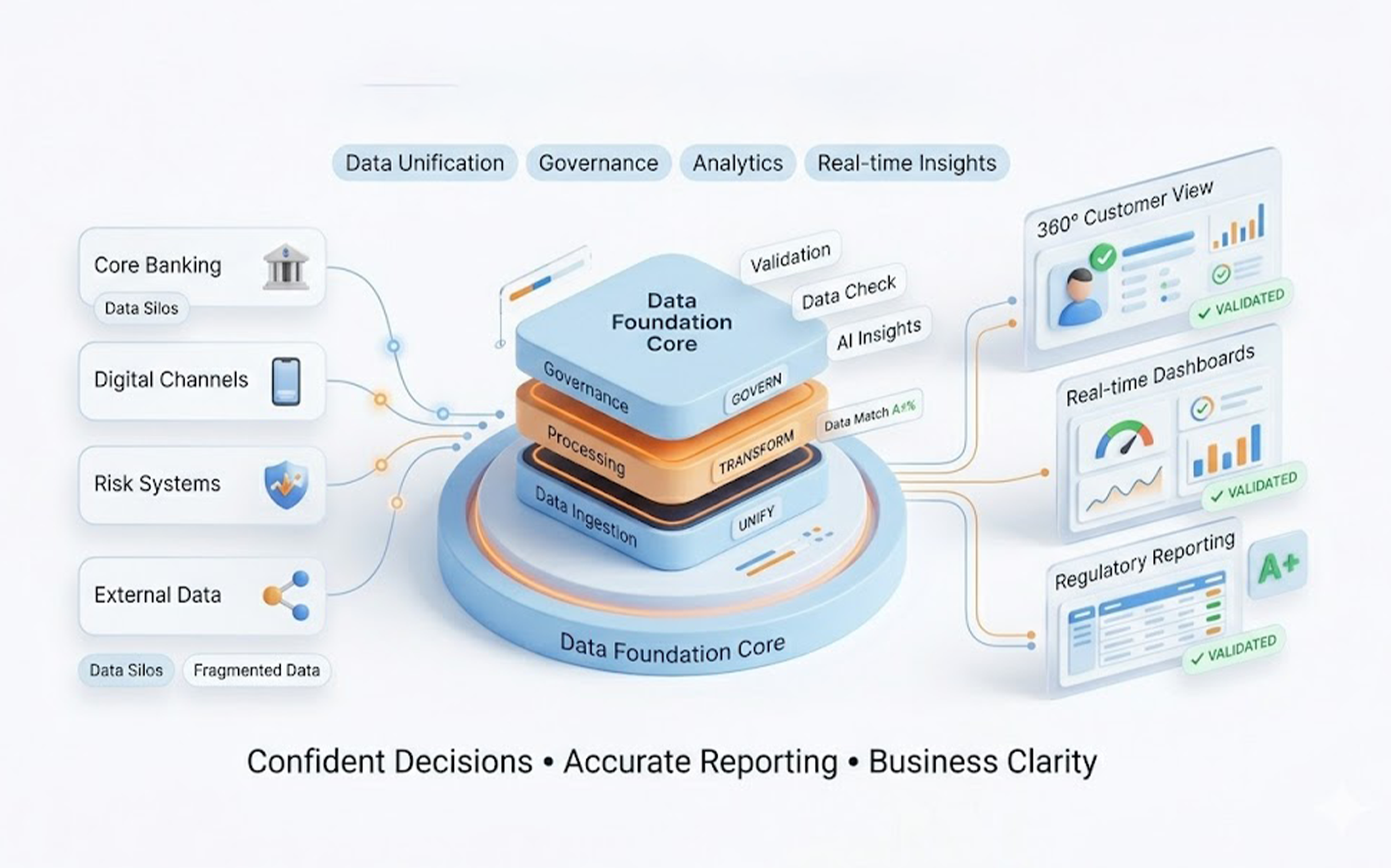

Seamlessly integrates and aggregates data from multiple banking systems into a unified platform

Ensures data accuracy through validation, reconciliation, and centralized control mechanisms

Converts data into regulator-ready reports and actionable business insights

Regulatory reporting is critical, complex, and time-sensitive. SIAS-EDWH automates the generation of submission-ready reports, ensuring accuracy, consistency, and compliance with central bank requirements.

Data spread across multiple systems often leads to inconsistencies and inefficiencies. SIAS-EDWH establishes a single source of truth, enabling unified and reliable insights across departments—from risk and compliance to business and marketing.

Without a comprehensive view of customers and operations, banks risk missing growth opportunities and early risk indicators. SIAS-EDWH enables a holistic 360° perspective, unlocking cross-sell potential, improving risk monitoring, and enhancing operational efficiency.