
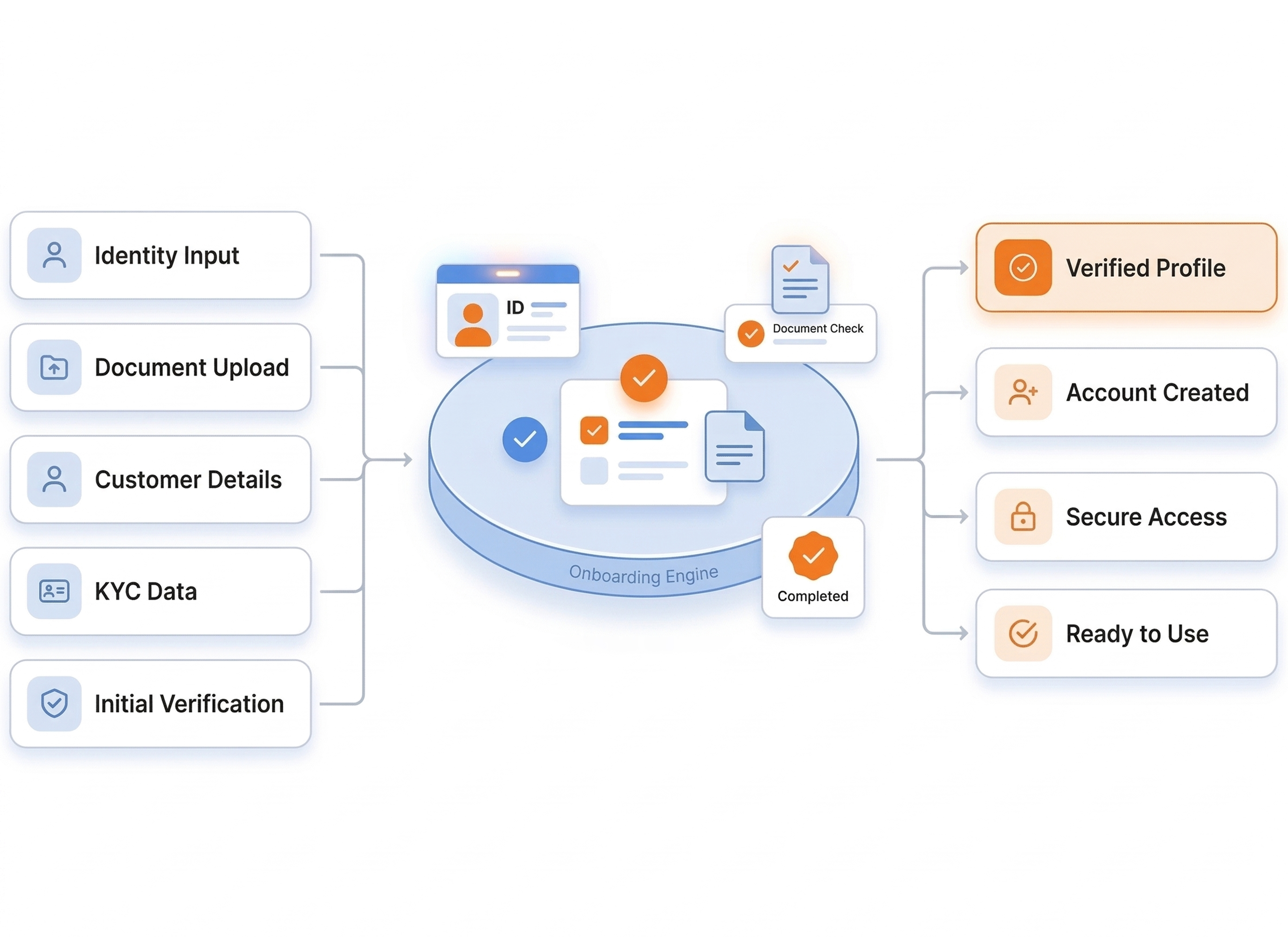
Opening an account or beginning a banking relationship often means long forms, repeated requests for information, and physical checks that slow customers down and increase operational workload.
iCust Digital Onboarding helps institutions shift from fragmented onboarding activities to a unified digital-first journey where customers can complete identity checks, submit documents, and finish setup remotely while institutions retain security, governance, and regulatory control. This results in a smoother initial experience and lowers friction at the very beginning of the customer relationship.
Looking to improve how customers get started with your institution?
Get StartedDigital onboarding through iCust is designed to support secure and remote account opening across customer channels. Customers provide identity documents, confirm information, and complete required checks through structured digital journeys.
AI-driven analysis and machine learning assist with document quality review, data consistency validation, and anomaly identification to improve accuracy and limit processing delays. Digital onboarding connects with core platforms, compliance services, and operational systems to maintain visibility, control, and alignment throughout the process.
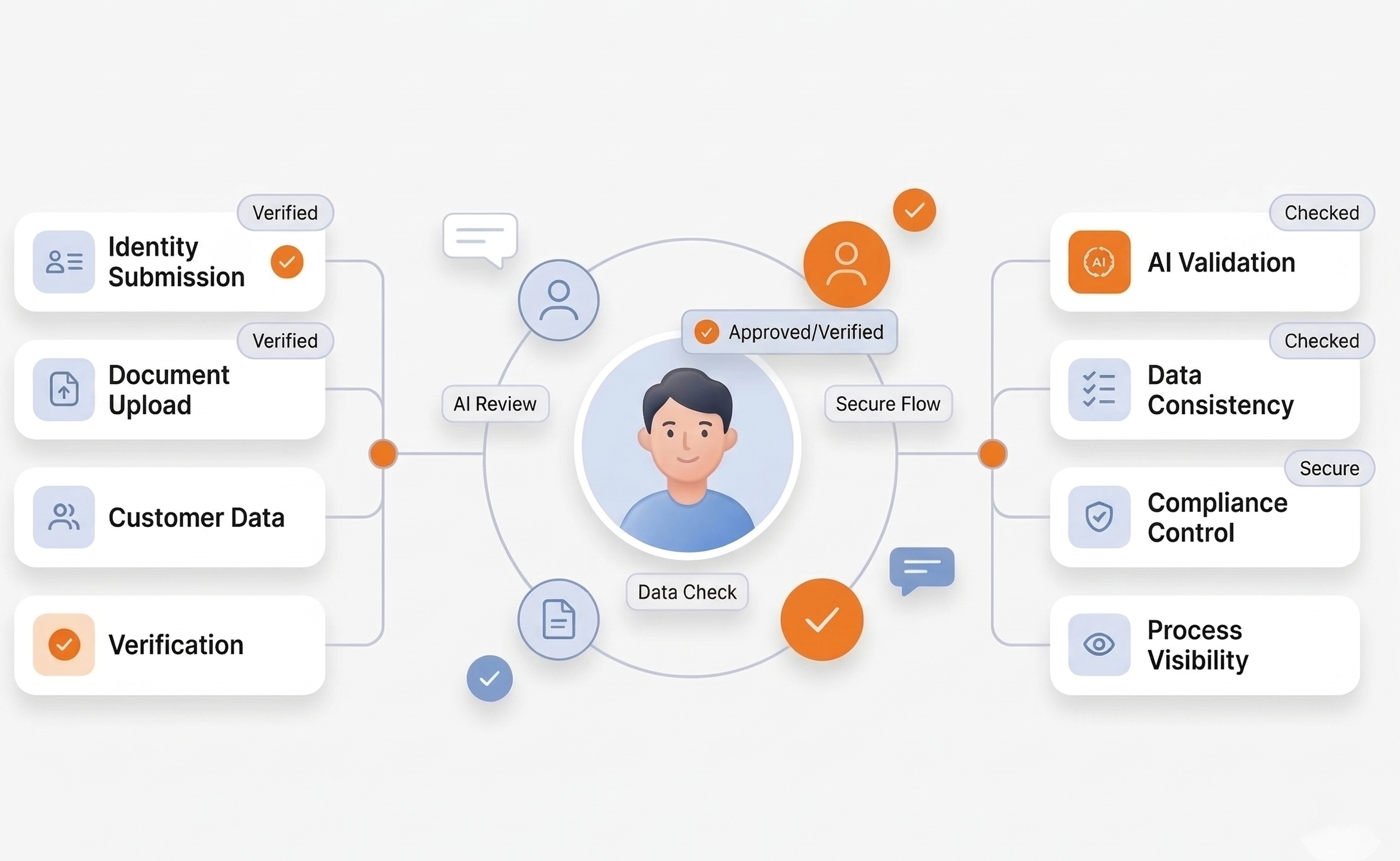

Structured, step-by-step digital journeys guide customers through every stage of onboarding from data entry to document submission and confirmation. This reduces confusion, prevents missed steps, and helps customers complete applications with fewer interruptions, improving completion rates and overall experience across digital and assisted channels.

Machine learning models analyze document quality, data consistency, and identity signals in real time to detect errors, inconsistencies, or potential risks early in the process. This supports faster verification, reduces dependency on manual reviews, and improves both processing speed and accuracy.

Configurable rules define approval flows, validation thresholds, and compliance checkpoints that reflect institutional policies and regulatory obligations. This ensures every onboarding case follows a controlled, auditable, and compliant process from initiation to activation.

Streamlined digital workflows shorten onboarding cycles, allowing customers to activate accounts sooner and start generating value for the institution earlier in the relationship.

Automation reduces manual effort, rework, and exception handling for operations teams, improving throughput while lowering the cost per onboarded customer.

Onboarding journeys stay aligned across digital, assisted, and branch touchpoints, ensuring a reliable and predictable experience for customers and staff at every entry point.

Clear, guided journeys encourage more customers to finish onboarding, reducing drop-offs and abandoned applications.

Automated checks improve data accuracy while ensuring regulatory and policy alignment from the first interaction.

Operational efficiency and reduced rework help lower onboarding costs at scale.
Let’s help you design onboarding journeys that are fast, secure, and aligned with your institution’s operational and regulatory needs.
Get Started